
Episode 18 | Beyond the Headlines: Prita Laura on The Art of Crisis Communication and the "Journalist's Eye"
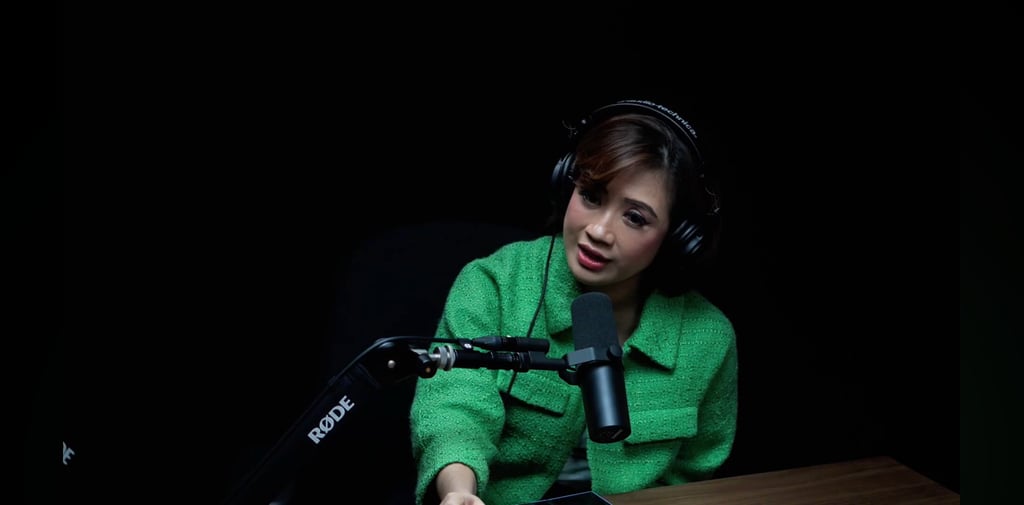
In this episode of Proxemics, former news anchor turned crisis communication expert Prita Laura shares invaluable insights on transitioning from journalism to government PR. From the deceptive calm of a "finished" crisis to the psychological pitfalls of the Dunning-Kruger effect in the age of AI, Laura dissects what it truly means to manage reputation in a volatile digital landscape.
PUBLIC RELATIONSCOMMUNICATIONTALENTCRISISPOLICIES AND REGULATIONSPUBLIC AFFAIRSTRENDSMEDIA
11/23/20254 min read

Introduction: From Critic to Insider
The transition from posing tough questions to answering them is rarely simple. Prita Laura, a veteran news anchor who spent over 15 years in journalism, made the leap to the Presidential Communication Office after years of critiquing government communication from the outside. Her motivation was a challenge to herself: rather than complaining from the sidelines, she decided to enter the system and fight for better communication from within.
Her journey offers a masterclass for PR professionals, particularly in how the "journalist's lens" can revolutionize crisis management.
The "X-Ray" Vision of Public Interest
One of the distinct advantages Laura brought to her role in government was a perspective strictly rooted in public interest. Unlike traditional PR, which often relies heavily on surface-level media monitoring, Laura applied investigative techniques to her communication strategy.
She recounts joining ministers for market operations to check food supplies. After the official press conference and the media scrum departed, Laura would return to the market alone to speak with vendors candidly. Often, the reality on the ground differed vastly from the official statement given in front of cameras. This "investigative" approach allowed her to understand genuine public anxiety and predict questions that government communicators were often unprepared to answer.
This depth of understanding acts like "X-ray glasses," allowing a communicator to see beyond the visible surface of an issue and understand the undercurrents that data monitoring might miss.
The Crisis is Not Over When the Fire is Out
A central theme of the discussion was the misconception of when a crisis actually ends. Laura points out a fatal flaw in modern PR: assuming a crisis is resolved simply because media monitoring shows the topic is no longer trending.
She offers a powerful analogy:
"The fire is extinguished, but is it really over? The fire is out, but the debris from the fire remains."
Even after the "fire" of a viral scandal is put out, the "debris"—the damaged reputation and public perception—remains. In an era where people rely on "thinking fast" and forming quick judgments, these lingering perceptions can be toxic. A brand or institution cannot simply move on; they must actively invest in rebuilding the reputation from the ashes, or the next crisis will ignite even faster.
The Psychology of Stupidity and the Dunning-Kruger Effect
The conversation took a philosophical turn toward critical thinking. Laura references the book The Psychology of Stupidity, noting that critical thinking isn't just about ability—it is about the will to challenge one's own biases.
She highlights the dangerous paradox where educated individuals often spread hoaxes because the false information aligns with their existing beliefs. This is exacerbated by the Dunning-Kruger effect.
In the age of AI and instant information, many people experience a sudden spike in confidence (the peak of "Mount Stupid") after learning a little bit about a topic, believing they are experts. However, true expertise requires traversing the "valley" of realizing how little you actually know. Laura expresses frustration at the rise of "instant experts" who influence millions on critical topics like macroeconomics or mental health without foundational knowledge.
The "Filtered Reality" of Social Media
This lack of critical thinking creates a dangerous environment on social media, which Laura jokingly refers to as the "happiest country in the world"—Instagram. It is a filtered reality where struggles, debt, and hard work are cropped out of the picture.
This illusion has real-world consequences for the workforce. The podcast discusses a Gen Z employee who, despite a promising interview, quit after a single stressful event to take a "sabbatical year". The curated reality of social media creates an expectation of life that clashes violently with the grit required for professional success.
Analyzing Political Communication Styles
Laura also provided a fascinating analysis of Indonesia's leadership styles, noting that every communication style has its "season".
Jokowi: His strength lies in his "folksy" (rakyat) non-verbal communication—eating at local stalls and visiting rice fields naturally. However, his team had to work to project firmness.
Prabowo: Comes with natural military firmness and command, suitable for the current era, though he may need to work on projecting a more relaxed, relatable image.
Sri Mulyani vs. Purbaya: The former Finance Minister used a "feminine," calculated style that built market trust but wasn't populist. The new Minister, Purbaya, uses a "Cowboy" style—blunt and straightforward—which captures public attention but carries the risk of needing to prove accountability quickly.
The Three Pillars of Crisis Success
To wrap up, Prita Laura outlined three essential traits for navigating crisis communication in today's world:
Have the Right Map: Do not rely solely on standard media monitoring. You must map the landscape using qualitative research and intuition. If you have the wrong map, you will choose the wrong strategy.
Calculation and Mitigation: You must build the "emergency stairs" before the building is on fire. In an era of cancel culture, crises can be triggered by anything (even a deepfake), so mitigation protocols must be ready instantly.
Internal Critical Thinking: It is not enough to ask the audience to think critically; the PR team must do so as well. You must be willing to ask, "Is the data wrong?" or "Is the product we are wrapping in beautiful paper actually rotten?".
TIMESTAMPS:
00:00 - Intro: The "Finished" Crisis Trap
00:51 - Welcome Prita Laura: From Anchor to Government PR
02:34 - Why Switch Sides? The "Journalist's Eye" in Government
04:45 - "X-Ray Vision": Investigating Beyond the Official Report
08:00 - Agenda Setting vs. Crisis Forecasting
13:00 - Crisis Reality: Fire Extinguished vs. Debris Remaining
17:15 - Mitigation Strategy: Building the Emergency Stairs
20:00 - Critical Thinking & The Psychology of Stupidity
27:27 - Dunning-Kruger Effect: The Problem with "Instant Experts"
31:50 - Social Media's "Filtered Reality" & Gen Z Workforce
37:40 - Media Relations: It's Not Transactional, It's Understanding
39:40 - Finding Your "Why" (feat. Jeffrey Rachmat's Book)
41:50 - Leadership Styles: Jokowi vs. Prabowo vs. Sri Mulyani vs. Purbaya
46:00 - 3 Pillars of Crisis Success: Map, Calculate, Critical Thinking
50:00 - Closing & Prita's New Project
Brand & Tokoh yang Disebut di Episode Ini:
Prita Laura (Guest): @pritalaura.lulu (Instagram)
Jeffrey Rachmat (Author, Permainan Cantik): @jeffreyrachmat (Instagram)
Purbaya Yudhi Sadewa (Finance Minister): @purbayayudhi_official (Instagram)
Sri Mulyani Indrawati: @smindrawati (Instagram)
Jokowi (President): @jokowi (Instagram)
Prabowo Subianto (President): @prabowo (Instagram)
Proxemics Podcast: @proxemicspodcast (Instagram/YouTube)
Metro TV: METRO TV (YouTube)
Taco Bell: @tacobellid (Instagram)
World Bank: World Bank (YouTube)
BPS (Badan Pusat Statistik): BPS Statistics Indonesia (YouTube)
Our Agencies:
www.praxis.co.id
www.prajna.co.id
www.explicar.co.id
www.whitewood.digital
Our Socials
Email: contact@proxemicspodcast.com
Phone: +628111014042
© 2025. All rights reserved.